
Why Create a Workout Corner?
A dedicated workout corner can make exercise more convenient and consistent. You do not need an entire room or expensive equipment. A small, well-planned area can support stretching, strength exercises, bodyweight workouts, and light cardio.
The best workout corner is one that fits your home and your routine. It should be easy to access, comfortable to use, and simple to keep organized. Even a space beside your bed, in a living room, or near a desk can work well.
Before buying anything, think about how you want to use the space. Your goals will help you choose the right location, equipment, and storage options.
Choose the Right Location
Start by looking for an area with enough room for your planned movements. You should be able to stand, stretch your arms, and lie down without bumping into furniture.
Good locations may include:
– A corner of the living room
– Part of a bedroom
– A section of a home office
– An open area in a basement
– A covered porch or enclosed balcony
– A spare room with unused floor space
Check the Floor and Ceiling
A firm, level floor is usually best for exercise. Avoid areas with loose rugs, clutter, or slippery surfaces. If you are using a mat, place it on a stable floor so it does not slide during movement.
Also check the ceiling height. Some exercises require reaching overhead, while resistance bands may need additional clearance. Keep enough space between your workout area and ceiling fans, lamps, shelves, or hanging decorations.
Consider Light and Airflow
Natural light can make the area feel more inviting, while good airflow can help keep the space comfortable. If possible, choose a spot near a window or in a room with reliable ventilation.
Avoid placing equipment where it blocks doors, heating vents, or walkways. Your workout corner should be convenient without making the rest of the room difficult to use.
Measure Before You Buy
Measure the available floor space and write down the dimensions. This simple step can prevent you from buying equipment that does not fit.
A basic workout corner may need only enough room for a mat, but you should leave additional space around it. Extra clearance makes it easier to move safely and store equipment.
Create a quick floor plan that includes:
– The exercise mat
– Storage baskets or shelves
– Any larger equipment
– Nearby furniture
– Doors, windows, and walkways
If you live in a small home, choose equipment that can be folded, stacked, or stored under furniture. A compact design helps the space serve more than one purpose.
Start With Essential Equipment
You do not need a large collection of gear to create a useful workout area. Begin with a few versatile items and add more only when you know you will use them.
Exercise Mat
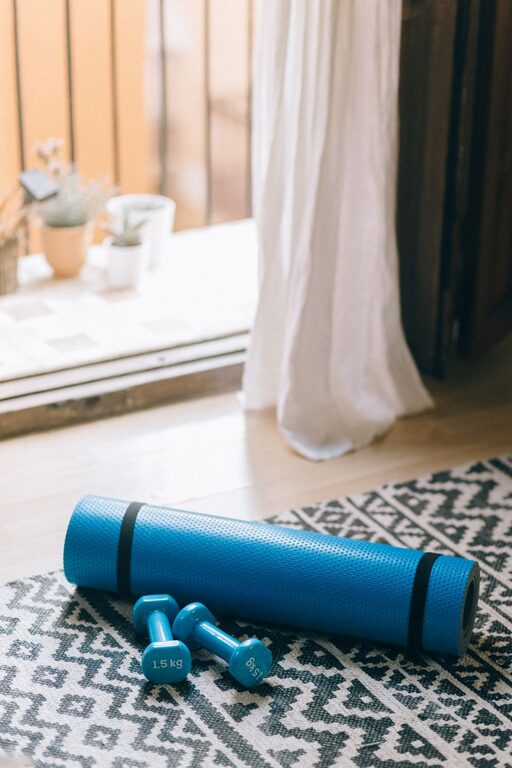
An exercise mat is one of the most useful items for a home workout corner. It provides a comfortable surface for floor exercises, stretching, balance work, and bodyweight movements.
Look for a mat that:
– Fits your available space
– Has enough cushioning for comfort
– Provides good grip
– Is easy to clean
– Rolls or folds for storage
A thicker mat may feel more comfortable on hard floors, while a lighter mat may be easier to move and store.
Resistance Bands
Resistance bands take up very little space and can support many types of exercises. They are available in different strengths, so a set can give you more options as your routine changes.
Store bands in a small basket, drawer, or wall-mounted pouch. Keep them away from sharp edges and direct sunlight, which can affect their condition over time.
Light Hand Weights
A pair of light hand weights can add variety to simple exercises. Choose a weight that you can control comfortably while maintaining good form. If you are new to using weights, starting with a lighter option can make the equipment easier to handle.
Adjustable weights can save space, but fixed weights may be simpler to use. Consider which option fits your budget, storage space, and workout style.
Optional Additions
Depending on your interests, you may later add:
– A jump rope
– A small step platform
– A stability ball
– Yoga blocks
– A foam roller
– A compact exercise bench
– A timer or small speaker
Add equipment gradually. A crowded corner can become difficult to use, while a small selection of practical items keeps the space inviting.
Plan Simple Storage
Good storage helps you keep the area ready for your next workout. Without a storage plan, equipment can quickly spread across the room and become a source of clutter.
Useful storage ideas include:
– A basket for bands and small accessories
– A narrow shelf for towels and blocks
– Hooks for jump ropes
– A rolling cart for portable equipment
– A storage bench with an enclosed compartment
– A wall rack designed for exercise gear
Keep frequently used items within easy reach. Store less-used equipment on a higher shelf or in a nearby closet.
Labeling baskets or containers can make cleanup faster, especially if several people use the space. Choose storage that matches the room so the workout corner feels like part of the home rather than an afterthought.
Make the Space Comfortable
A workout corner should encourage you to use it. Small design choices can make a noticeable difference.
Consider adding:
– A mirror for checking general movement and posture
– A small towel
– A water bottle
– A clock or timer
– A plant or simple decoration
– A washable floor mat
– A nearby fan, if appropriate
Keep decorations limited so they do not interfere with movement. Avoid placing glass objects, sharp-edged furniture, or unstable items close to the workout area.
If you use music or follow digital classes, place a phone or tablet stand where you can see it without stepping around equipment. Keep cords neatly secured and away from the exercise surface.
Build a Routine Around the Corner
A workout area becomes more valuable when it supports a regular routine. Choose a schedule that fits your daily life rather than trying to create an unrealistic plan.
You might use the corner for:
– A short morning stretching session
– Bodyweight exercises during a work break
– Light strength training in the afternoon
– A relaxing mobility routine in the evening
– Weekend workouts with a longer session
Prepare the area before you begin. Roll out the mat, place the equipment nearby, and remove distractions. When everything is ready, starting can feel easier.
Keep a simple record of the activities you complete. You can use a calendar, notebook, or phone app. The goal is not to create pressure, but to notice patterns and build consistency.
Keep Safety and Maintenance in Mind
Inspect your equipment regularly. Replace items that are cracked, torn, loose, or showing other signs of damage. Follow the care instructions provided with each product.
Wipe down mats and equipment as needed, especially if several people use them. Keep the floor dry and clear before each session. Store bands, weights, and other items so they cannot fall or create a tripping hazard.
Choose movements that match your current experience and available space. Focus on controlled motion and stop if an exercise feels uncomfortable or difficult to manage. When using online workout videos, select programs that clearly explain the movements and offer beginner-friendly options.
Refresh the Corner Over Time
Your workout corner does not have to be perfect from the start. Use it for a few weeks and notice what works well and what needs improvement.
You may discover that:
– The mat needs to move closer to a wall
– Equipment storage should be easier to reach
– Better lighting would help
– A smaller speaker would reduce clutter
– Certain items are rarely used
Make small changes as your routine develops. A practical workout corner should grow with your needs while remaining simple, tidy, and easy to use.
With a suitable location, a few versatile tools, and an organized setup, even a small area can become a reliable part of your home fitness routine.